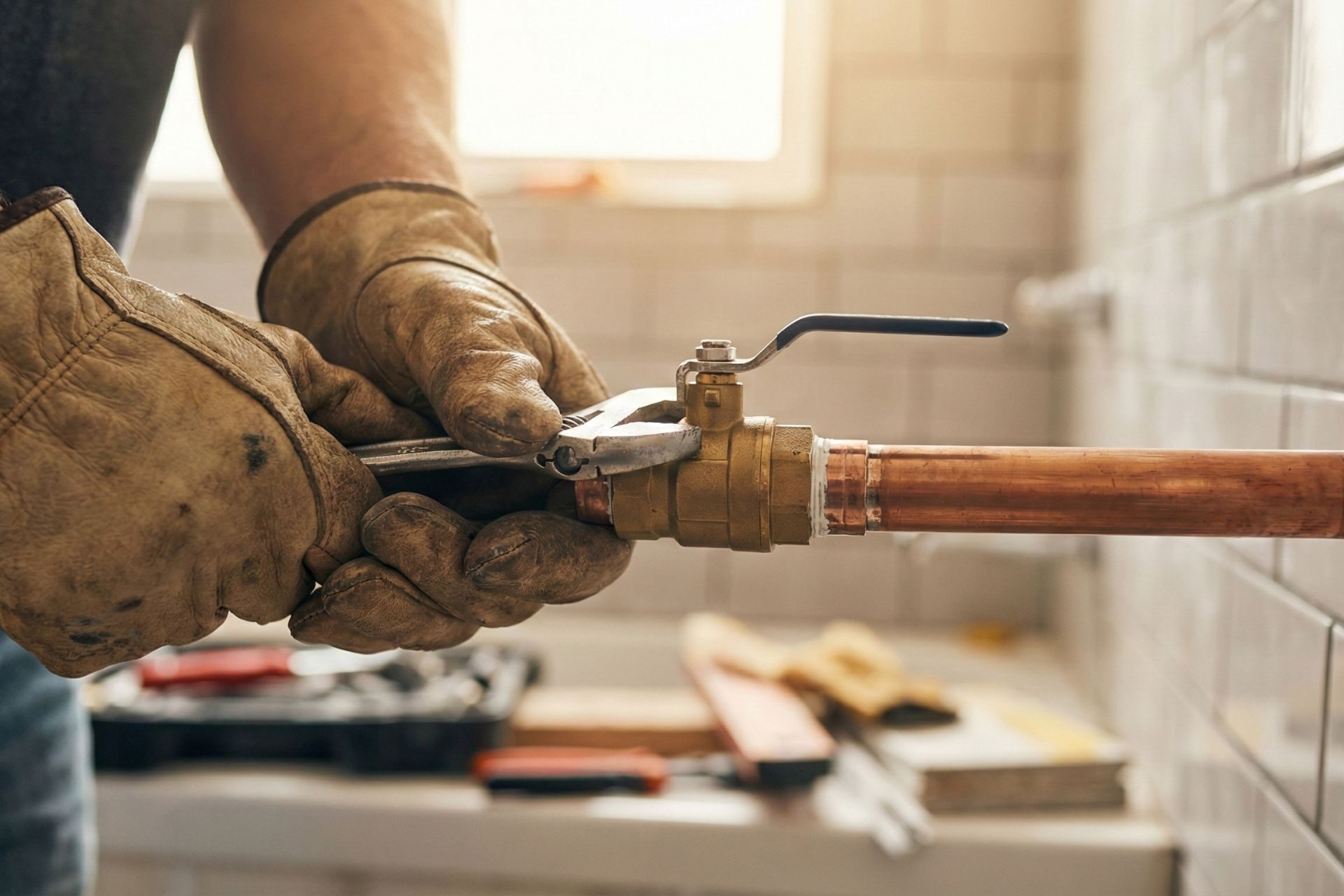
Do you ever wonder how water gets to your washbasin? It looks like magic, but it’s really a bunch of tubes and connectors that work together. If you’re building a new house or fixing a leaky washbasin, it’s very helpful to know how your plumbing works.
Water is a big part of our daily lives. We use it to wash, cook, drink, and shower. You need the right parts to keep the water flowing well. You need plumbing parts and pipes to fix this. If you choose the wrong ones, you could get leaks, bursts, or rusty water. Nobody wants that!
This guide will tell you everything you need to know about these important parts. We will talk about the different types, how to pick the best one, and why quality matters. Let’s get going!
What Are Plumbing Fittings and Pipes?
Let’s go back to the basics. Imagine a big Lego set that is made of water.
- These are the long pipes that go through the walls. They are like roads for water. They bring water from the main source outside your home to your sinks, showers, and toilets. They also take dirty water to the drain.
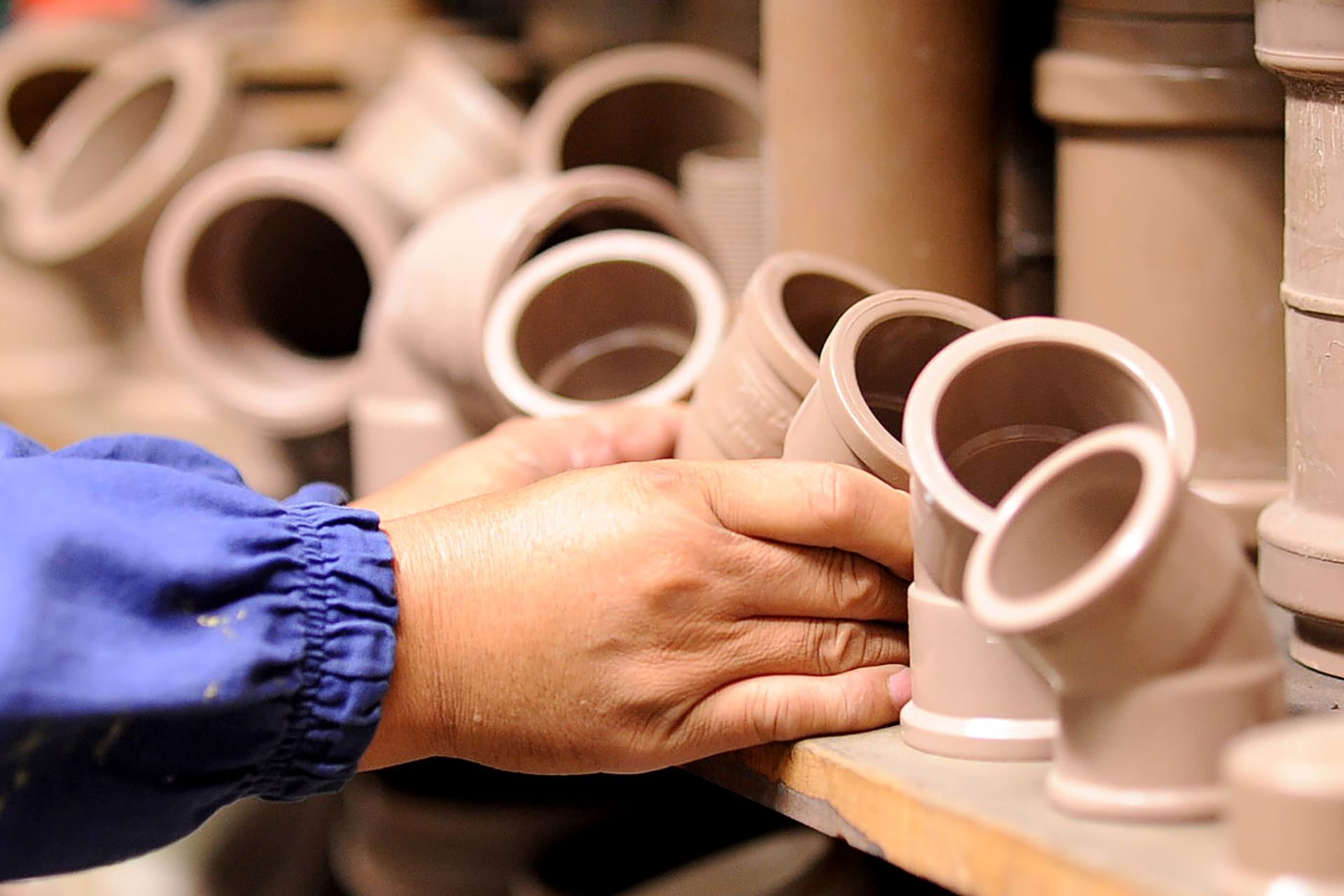
- These are the connectors that fit together. Pipes are usually straight. But houses have walls, corners, and places to turn. Fittings let pipes change direction, split into two parts, or join two parts together.
Without fittings, pipes would just be straight lines that don’t go anywhere. Plumbing fittings and Pipes work together to create a full network that is hidden behind your walls and under your floors.
Types of Plumbing Pipes
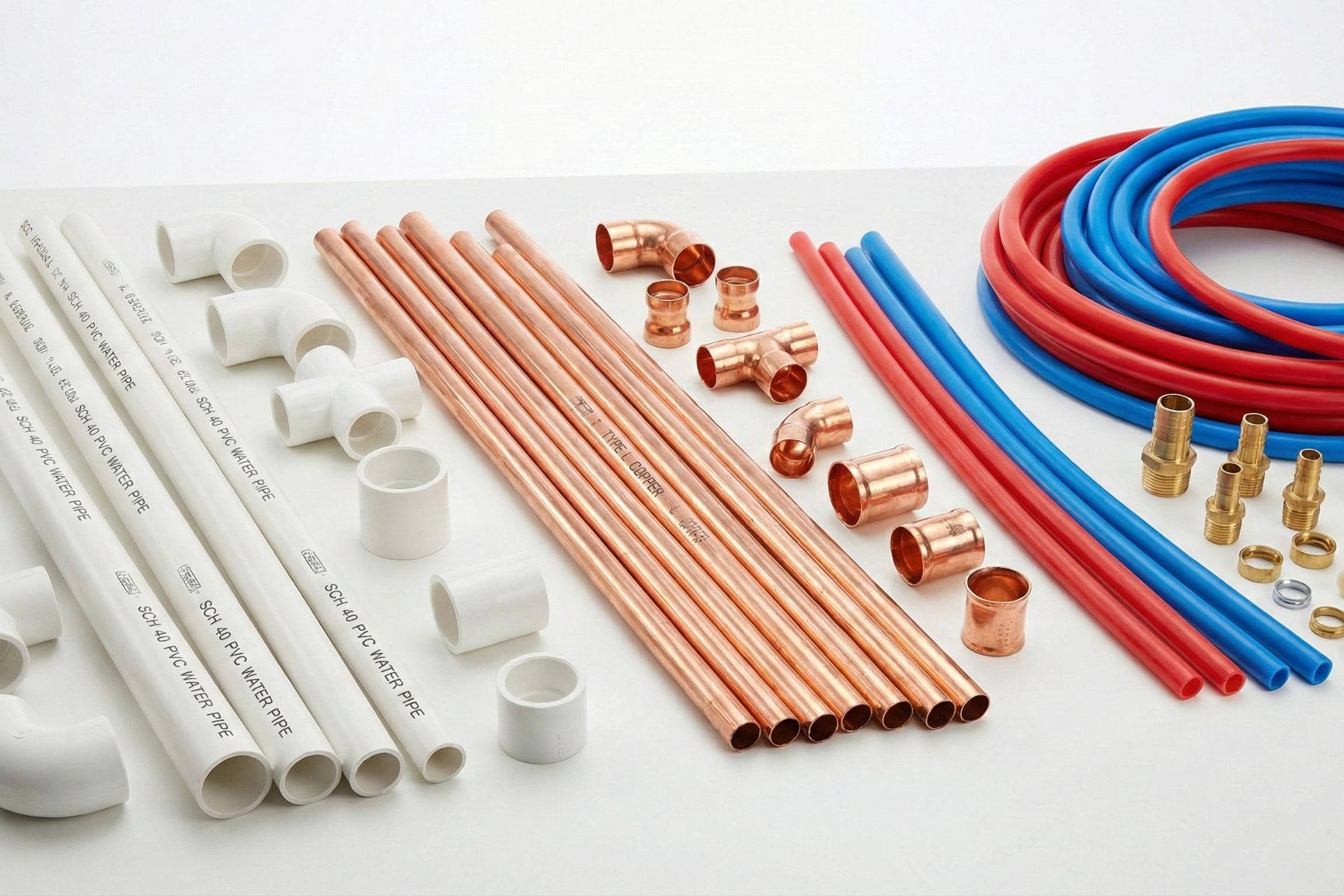
Not all pipes are the same. Some are made of metal, and others are made of plastic. Each type has a different job. These are the ones you will most likely find in homes and offices.
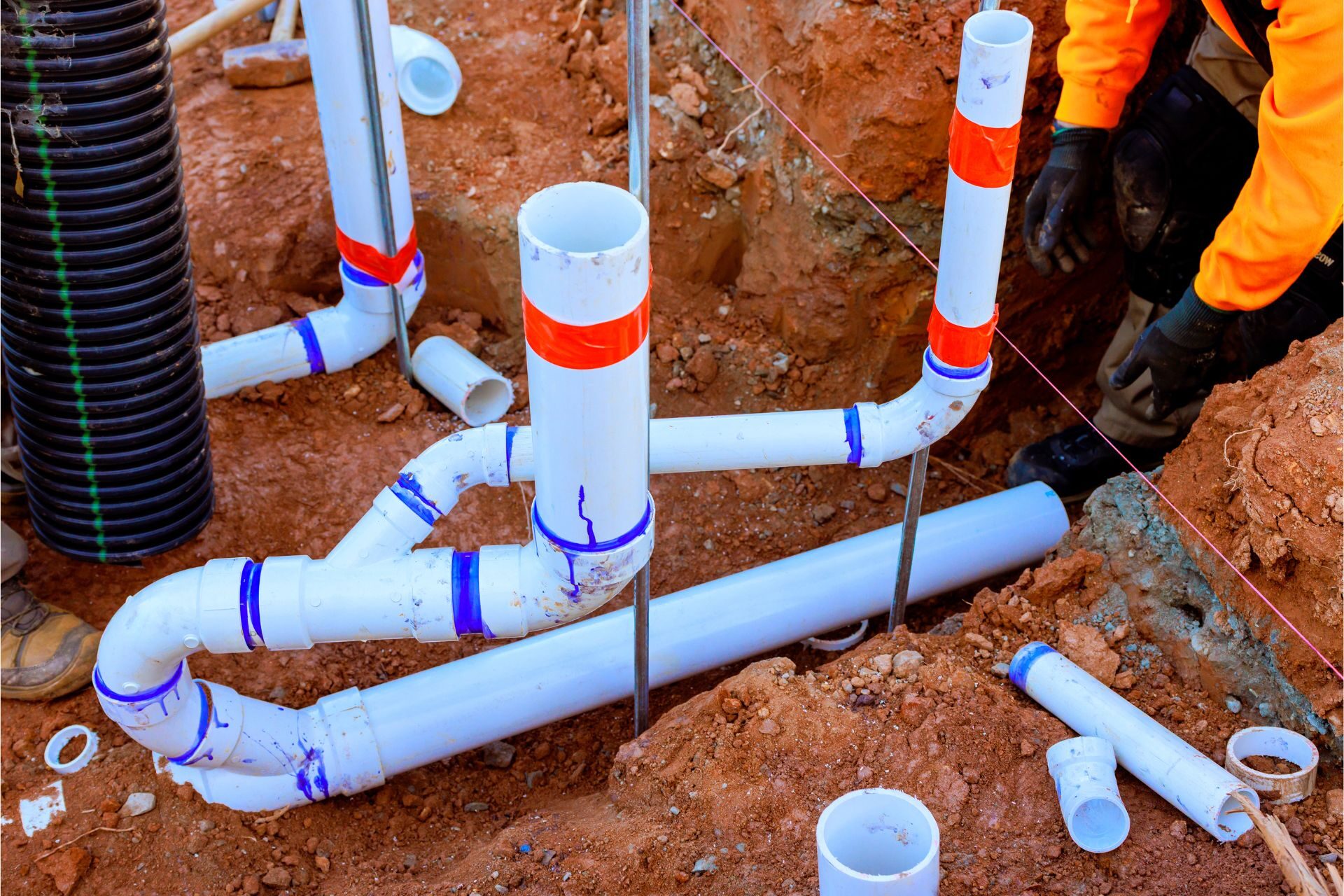
1. Pipes made of PVC (polyvinyl chloride)
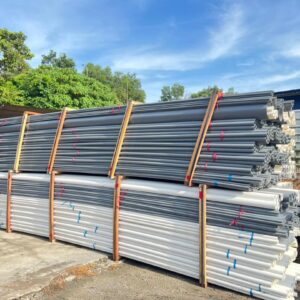
You might have seen these white plastic pipes before. Many people like them.
- Best for: Waste lines in toilets and drains.
- People like them because they are cheap, light, and easy to cut. They also don’t rust.
- Important: Don’t use them for hot water lines because they can’t handle very hot water.
2. Copper pipes
These are the pipes that are made of shiny, reddish-gold metal. They’ve been around for a long time.
- Best for: Giving you hot and cold water.
- People like them because they are very strong and last a long time. They don’t get sick very often and can handle the heat well.
- Keep in mind that they can be expensive and need to be soldered (melted metal) to fit together.
3. Cross-linked polyethylene (PEX) pipes
This is a newer type of plastic pipe that comes in bright colours, like red for hot and blue for cold.
- Best for: Water lines that go through walls.
- They are popular because they can bend! You can bend them around corners without breaking them. This means fewer leaks because you don’t need as many parts.
- Please keep in mind that they can’t be used outside because the sun can hurt them.
4. Steel pipes that have been galvanised
These are thick, grey metal pipes that you often see in older homes.
- Best for: Gas lines (these days).
- People like them because they are tough.
- Note: We don’t use them for water very often anymore because the inside rusts. This could stop the water from moving.
Common Plumbing Fittings and Their Uses
Now that we know what pipes are, let’s look at the things that hold them together. These are the shapes you’ll use the most, even though there are a lot of them.
1. Elbows
Imagine that you are walking down a hallway and need to turn right. Pipes need to do that too!
- It changes how the pipe flows.
- A sharp turn is 90 degrees, and a gentle turn is 45 degrees.
2. T-shirts
It looks like the letter “T”
- What it does: It splits one pipe line in half.
- A Tee splits the water from one main pipe so that it goes to both the toilet and the washbasin at the same time.
3. Couplings
The pipe might not be long enough to reach its destination.
- What it does: It connects two straight pipes to make a longer line.
- This is a special type of coupling that is used to fix a leak. It goes over the pipe without any trouble.
4. Valves
These are like the steering wheel for your water.
- What it does: It starts or stops the flow of water.
- For example, the little handle under your toilet or washbasin is a valve. If there is a leak, this will stop the water.
5. Caps and Plugs
- What they do: These are used to close off the end of a pipe.
- If you take out an old washbasin and don’t put in a new one right away, you can stop the water from spilling out by putting a cap on the pipe.
Choosing the Right Plumbing Fittings and Pipes
Choosing the right parts isn’t always easy. If you mix the wrong things, they could eat away at each other and leak. This is a short list to help you choose the best plumbing fittings and pipes for your job.
- Look at the water’s temperature. Is the pipe carrying hot or cold water? Use copper, PEX, or CPVC for hot water.
- Cold Water: Any pipe will work, but PVC is best for drains.
- Look at the Water Pressure: If the water pressure gets too high, some pipes can break because they are weak. Check the label on the pipe to see how much pressure it can handle.
- Location is important: If you’re going underground, you need materials that are strong and won’t rot in the ground. Standard PVC can break when it is in the sun. You might have to paint it or use something else.
- Budget: PVC and PEX are both very cheap, so they are a good choice if you don’t have a lot of money.
- High Budget: Copper costs more, but it looks great and adds value to your home.
Plumbing Fittings in Hardware and Tool Applications
Plumbing work can’t be done with just your hands. You need the right tools to use these fittings. The right tool makes sure that the fitting is snug and won’t leak.
- You use a pipe wrench, which is a heavy tool, to hold and turn metal pipes. It has sharp teeth that dig into the metal to hold it in place.
- This pipe cutter is much better than a saw. It holds the pipe and cuts it cleanly by turning around it. When the cut is clean, it’s easier to put the fitting on.
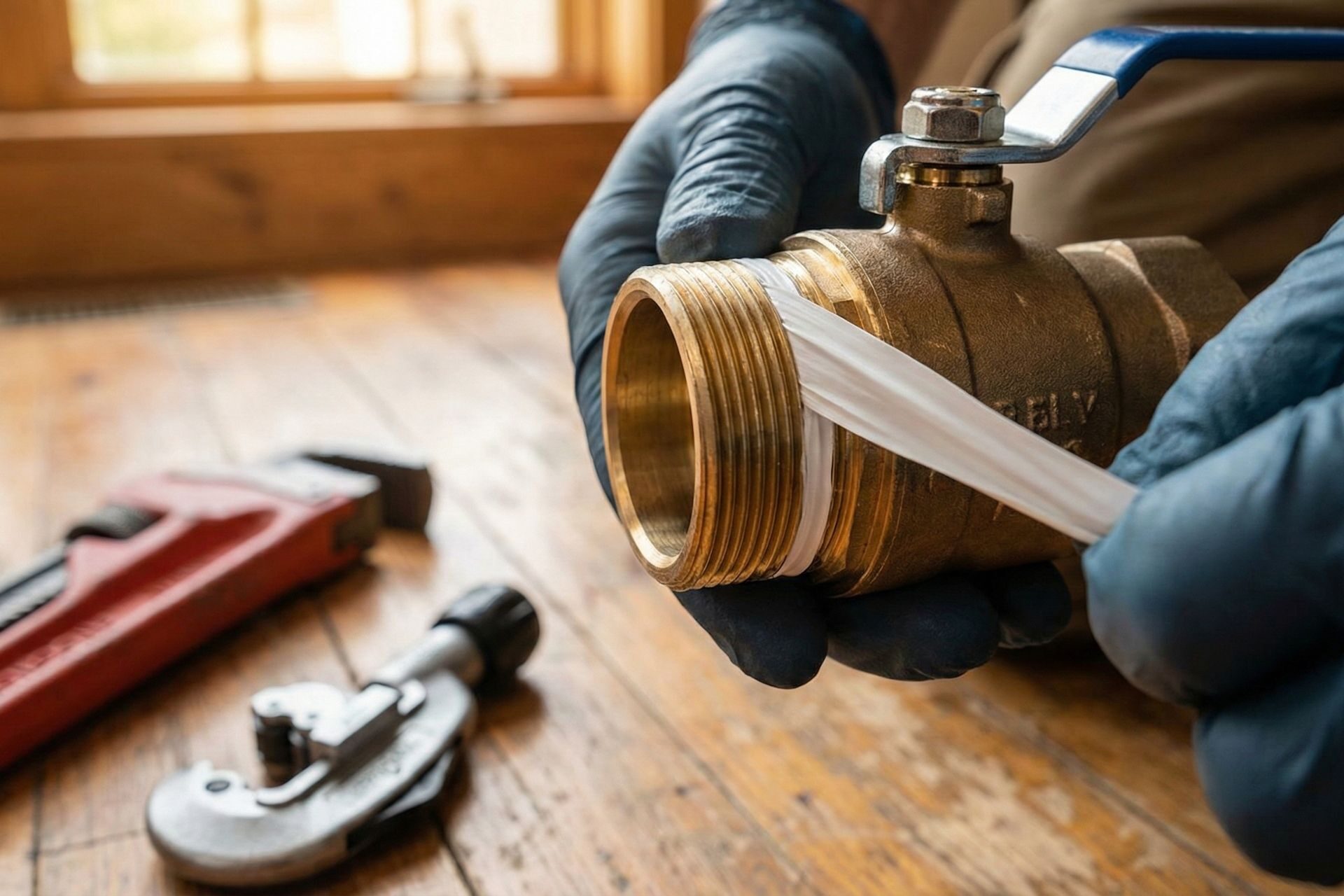
- Teflon Tape is a white tape that is very thin. You wrap it around the threads of a fitting before you screw it in. It fills in the little holes so that water can’t get through.
- PVC glue: You don’t put screws into plastic pipes. You really “weld” them together with a special glue. It melts the plastic a little bit, which makes the two parts stick together.
Things don’t break when you use the right tool. A plier could crush a soft brass fitting. Use the right tool for the job every time.
Importance of Buying from a Reliable Plumbing Materials Supplier
You might think that all pipes look the same, so why not get the one that costs the least? This is a very dangerous trap.
Cheap plumbing parts often have walls that are too thin or weak. They may look fine now, but they could break in a year. A pipe that is cracked inside a wall can let water into your home and cost you thousands of dollars to fix.
Why should you have faith in a good supplier?
- Quality Control: Good sellers check their goods to make sure they are safe.
- A good supplier knows what they’re doing. If you tell them what you’re building, they can tell you exactly what parts you need.
- Durability: High-quality parts last for decades. Cheap parts might only last a few years.
You should pay a little more for water that makes you feel safe.
KSP Edaran’s Plumbing Fittings and Pipe Solutions
If you want to find the best materials, you should look at KSP Edaran. They know a lot about this place.
They know that every building is different. Whether you’re remodelling a small bathroom in an apartment or building a big office tower, they have everything you need. They have a lot of plumbing parts and pipes that will last.
Why choose them?
- Wide Range: They have everything from basic PVC for drains to high-end industrial valves.
- You can trust the quality: They get materials that are strong and reliable.
- Helpful Service: They can help you pick the right size and material so you don’t mess up.
If you get your parts from a reliable source like KSP Edaran, you won’t have to worry about leaks keeping you up at night.
Conclusion
It might seem like plumbing is hard, but all you have to do is put the right pipes in the right places. If you know the different types of pipes and connectors, you can make better choices for your home or business.
Remember that the goal is to have a system that is leak-free, clean, and safe. Always use the right fittings, no matter what kind of pipe you have, like copper, PVC, or PEX. Most importantly, always buy your pipes and plumbing parts from a company you can trust. Good materials today will mean fewer problems in the future.



 Malay
Malay  English